The content review that became a redesign
I was assigned to fix the copy on a broken admin section. The copy wasn't the problem. The structure was.
Role
UX Designer & Writer. Information architecture, product design.
Context
Whatfix, 2024–25. B2B SaaS (digital adoption).
Outcome
Three decisions shipped, live in Whatfix
The product
Whatfix is a B2B digital adoption platform - in-app guidance, walkthroughs, and self-help built onto other software. This project sat on the admin side: the surface teams use to create and manage that guidance. For more information, see www.whatfix.com
The chair
This is the project where I started designing. I came in from the writer's chair, assigned to review copy on the Release Management section, an admin area where account managers manage product updates. But from that chair I could see the copy sounded off because the flow was off: a name that described the wrong thing, no way for account managers to control when updates reached their end users, a reactive workflow that made you clean up after the product instead of directing it. The copy wasn't the problem. It was the symptom. Design and content aren't parallel disciplines; they're the same discipline from different sides, and the writer's chair is where the mismatch shows up first.
Context
Release Management was checking PRD boxes without solving the user's problem. Account managers were frustrated: the section was named for the internal engineering concept ("releases"), not the job they actually came to do, control what their end users see, and when. My assignment was narrow: review and refine the copy. I could have flagged the naming, fixed the error strings, and stayed in my lane.
The question: what is this section actually for?
Instead of rewriting copy on top of a broken flow, I asked what the section was for: account managers proactively managing what reaches their end users. That question doesn't have a copy answer; it has a structure answer. So I opened Figma for the first time and designed a full redesign proposal, unprompted.
What I changed: three decisions that shipped
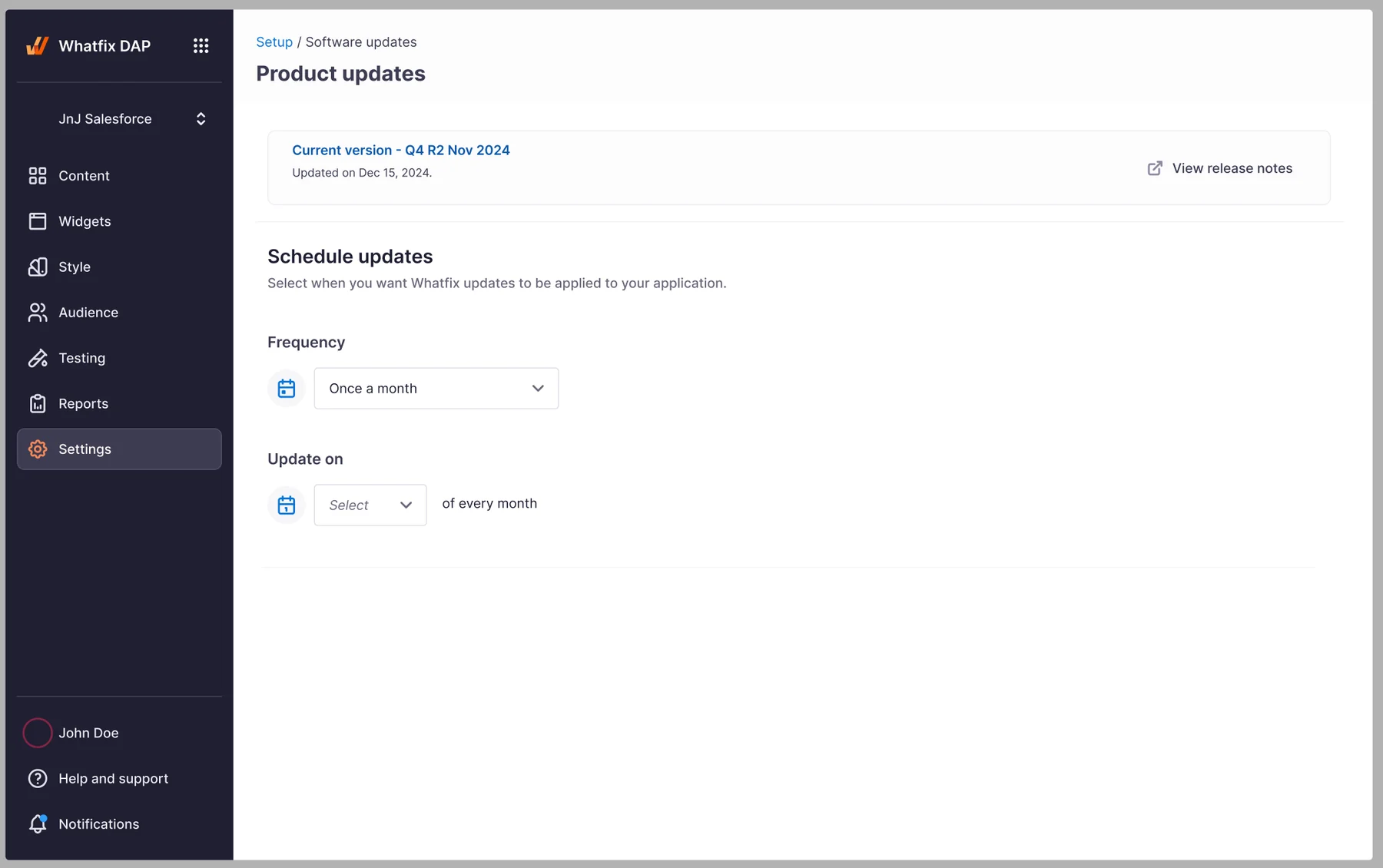
1Renamed "Release Management" to "Product Updates." Not a copy tweak, an information-architecture decision. The old name described the engineering event; the new one describes the user's job, and it reframed the section at the top level of the navigation. This is the move that made all the copy underneath it make sense.
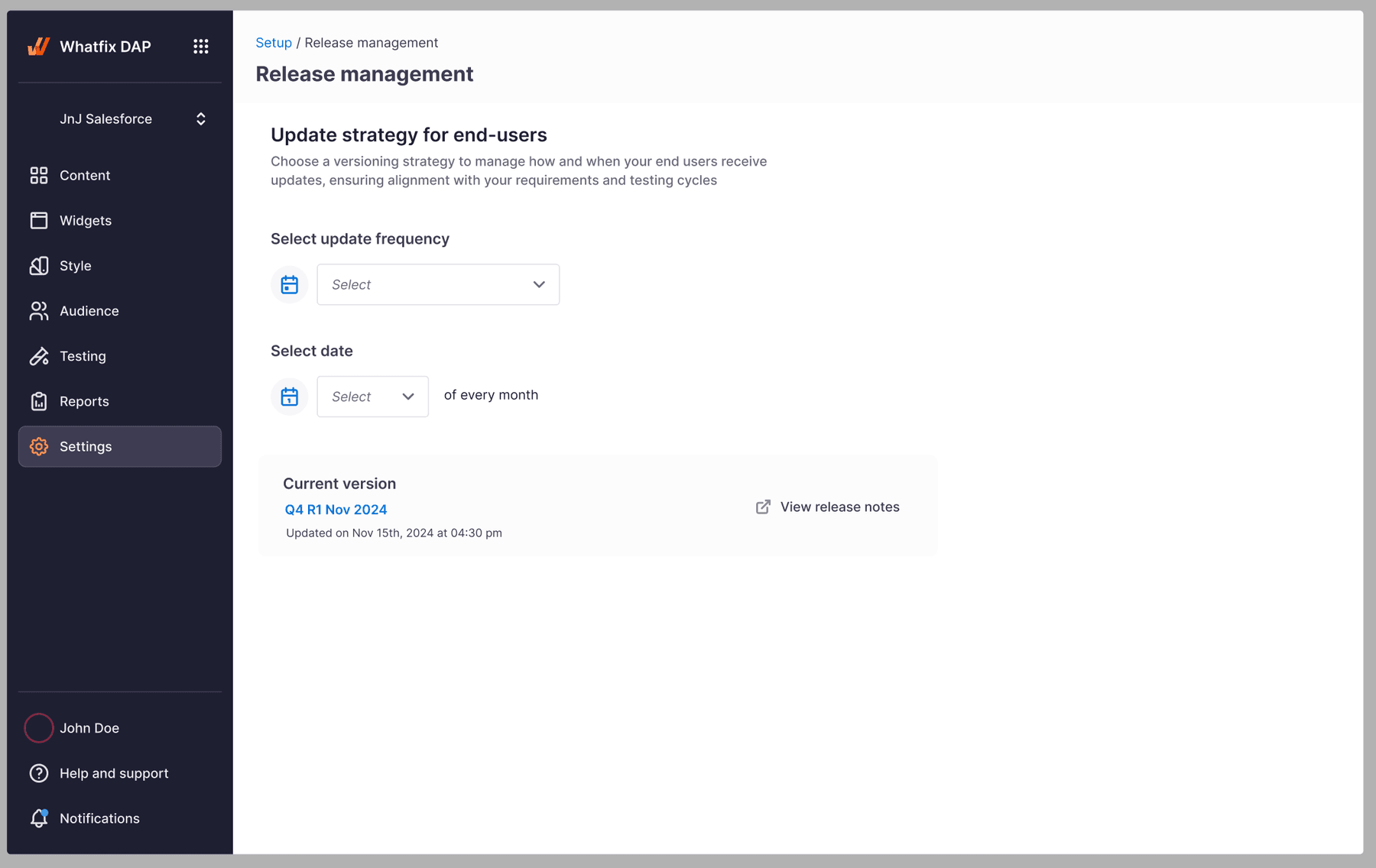
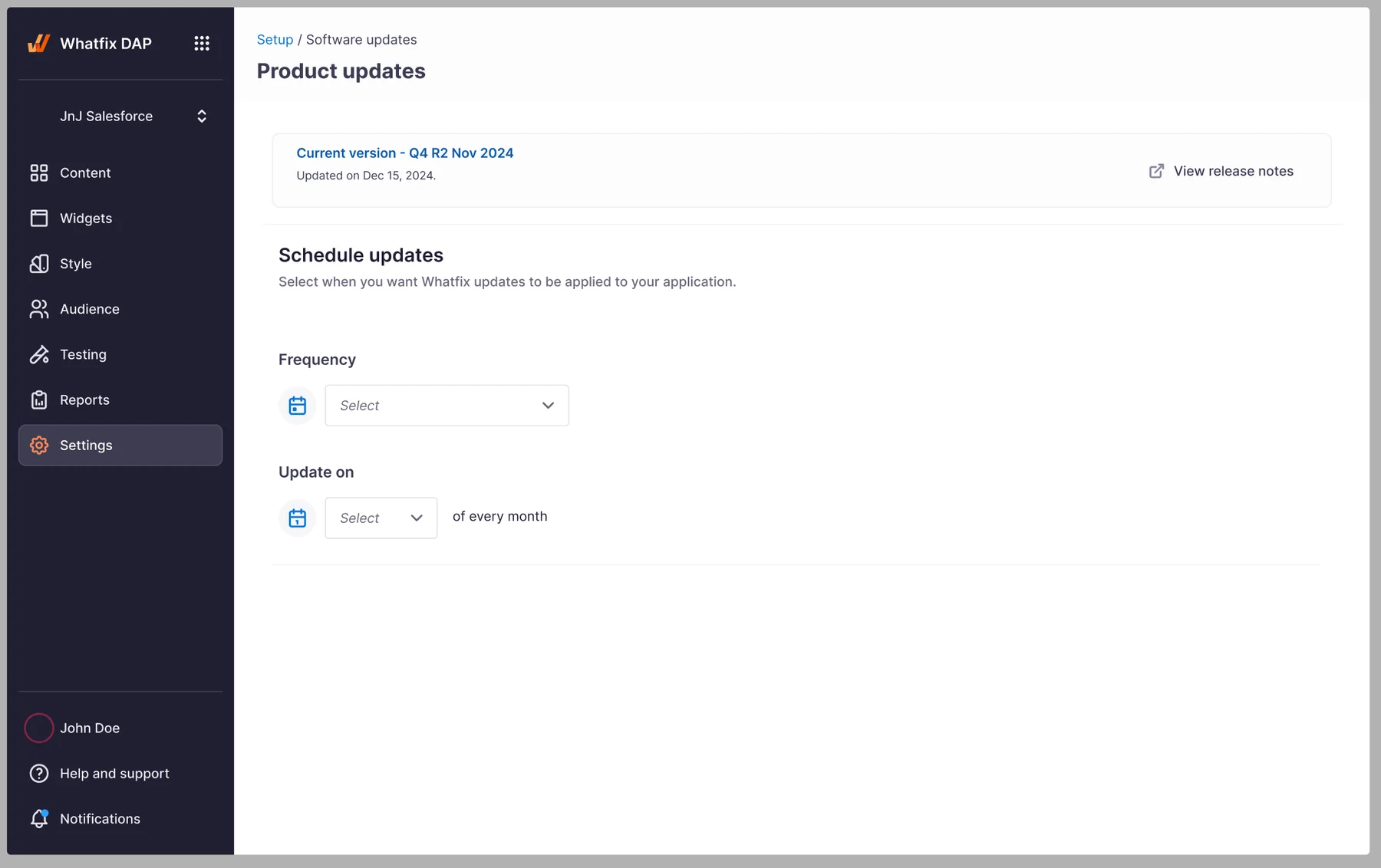
2Restructured the workflow so account managers could proactively schedule when updates apply to their end users, turning a reactive clean-up flow into one they control.
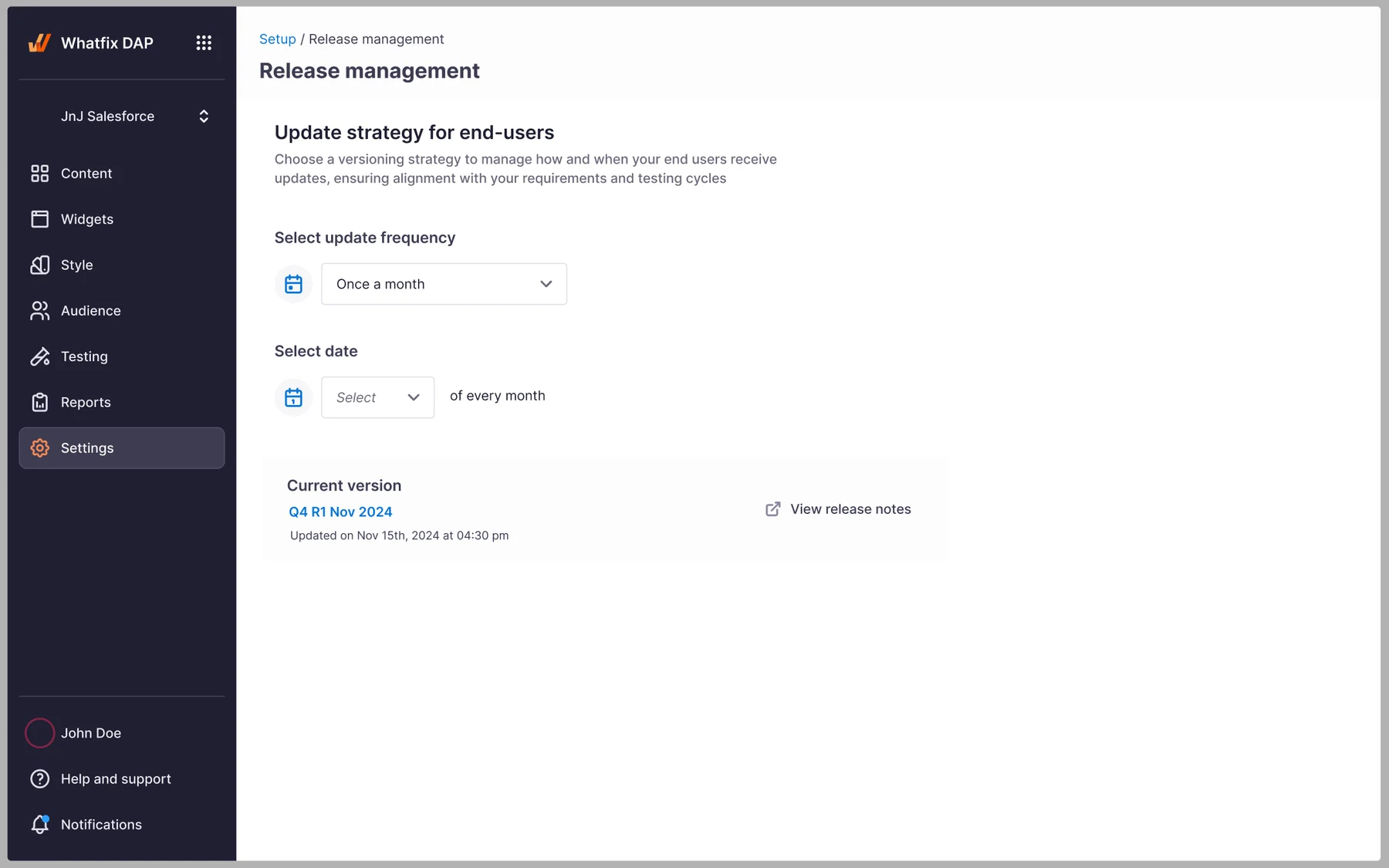
3Rewrote confirmation and error messaging into a user-centric framework, what happened, why, and what to do next, now that the structure could actually support it.
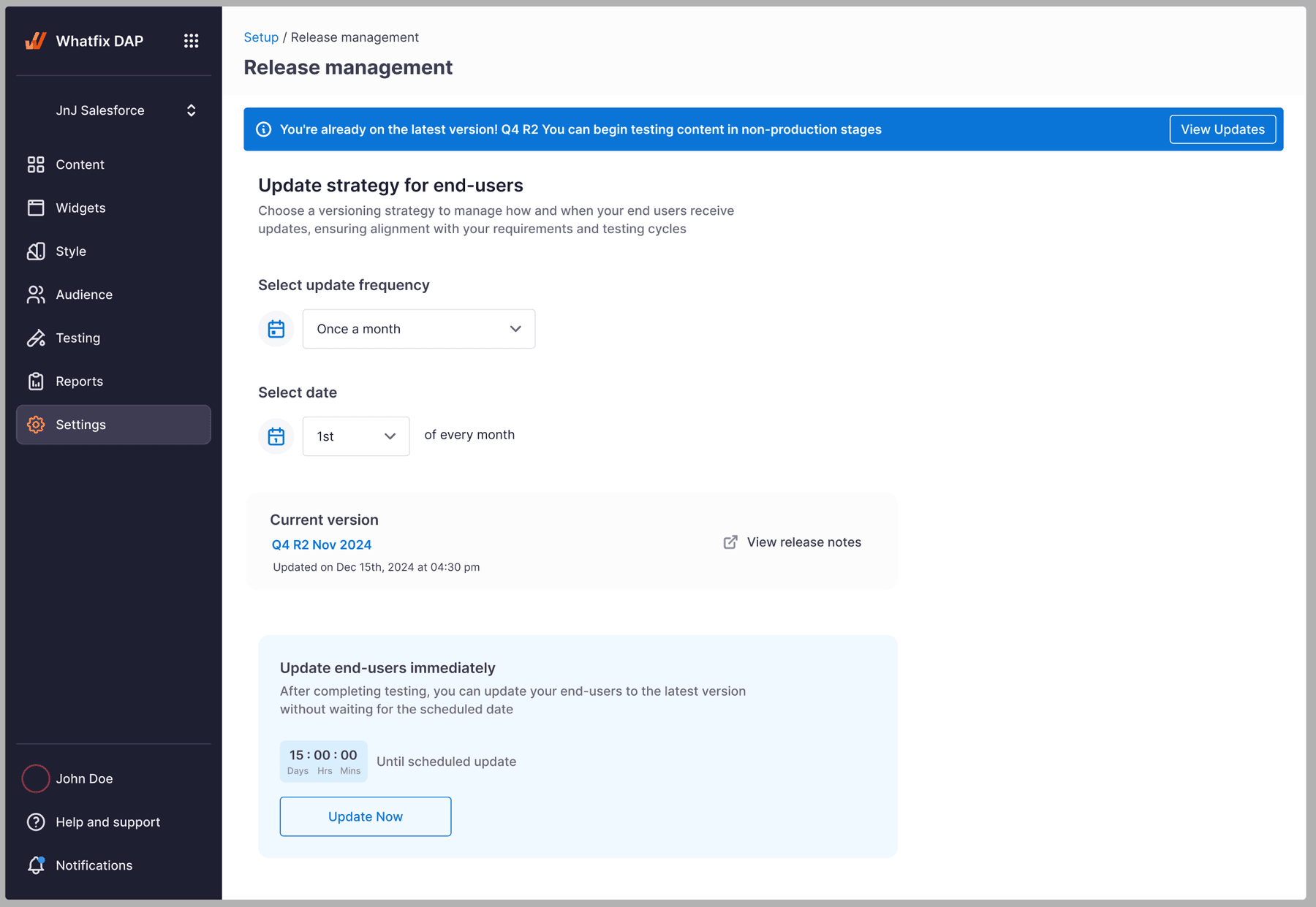
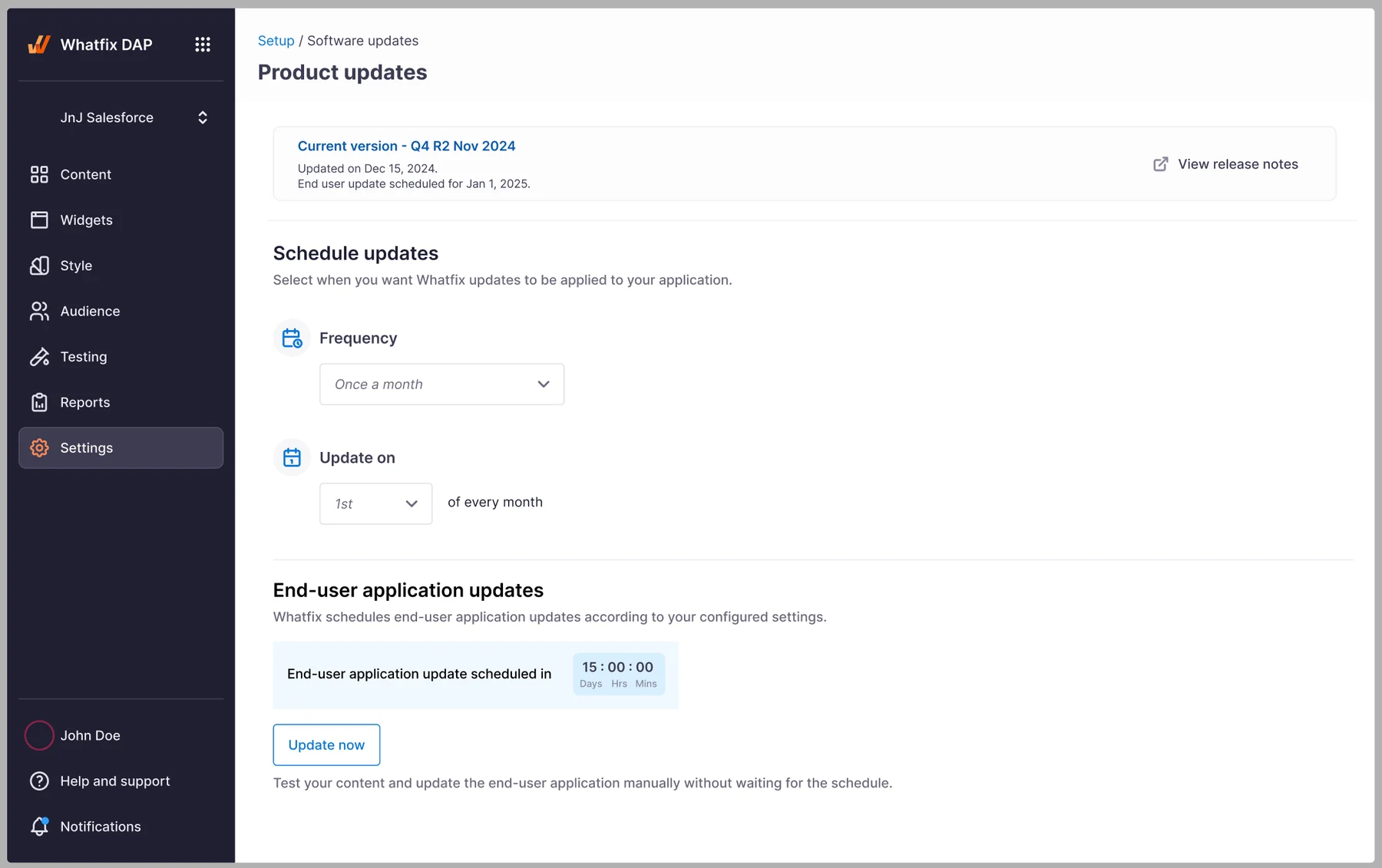
How I brought it in
I framed the redesign as a suggestion and took it directly to the project's Senior Product Designer in a 1:1, deliberately, not around him. The Head of Design saw both versions and moved forward with my approach. Three of my decisions shipped and are live in Whatfix.
Outcome, honestly qualified
Three of my design decisions shipped and reframed how the section works. I don't have adoption metrics; I moved on from Whatfix before the numbers landed, and I'd rather tell you that than attach a number I didn't measure. The more durable outcome was personal: this stopped being a one-off. Designing became a pattern I kept up through the rest of my writing tenure, and a few months later Accolade hired me formally as a Product Designer & Content Strategist. This is the project where the transition started.
What I carry forward
Two things. First: when the copy sounds wrong, check the structure. Content problems are usually design problems one layer down.
Second, learned the harder way: being right about a design isn't enough; how you get there decides whether the team wants to build with you next time. I proposed this one as a finished thing. Now I bring collaborators in from the start: same design outcome, none of the friction.
"When the copy sounds wrong, check the structure. Content problems are usually design problems one layer down."