Taking it apart.

Products nobody asked me to look at, walked by hand until something gave. Every claim here is measured, sourced, or marked as untested.

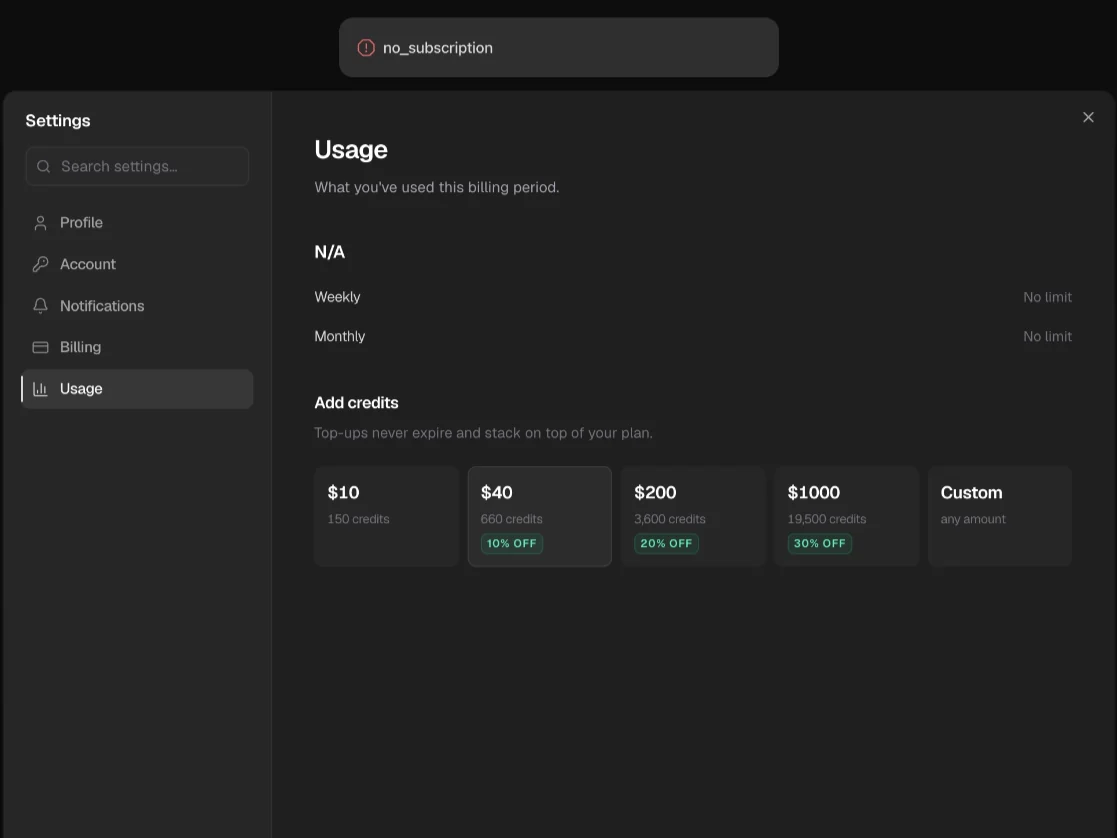
A toast at the top of a dark settings window reading “no_subscription” beside a red warning circle. Beneath it the Usage screen, headed “What you’ve used this billing period”, reading N/A, then Weekly “No limit” and Monthly “No limit”.

Cardboard: No limit, and no video

An hour with an AI video editor that never made me a video. The trial starts after you pick a plan, so what I can report is what the product says before you pay, and it never settles on one way of saying it.

Independent teardown, solo

Cardboard · 2026 · AI video editing

Content design · Interaction design · Prototype
Read the teardown
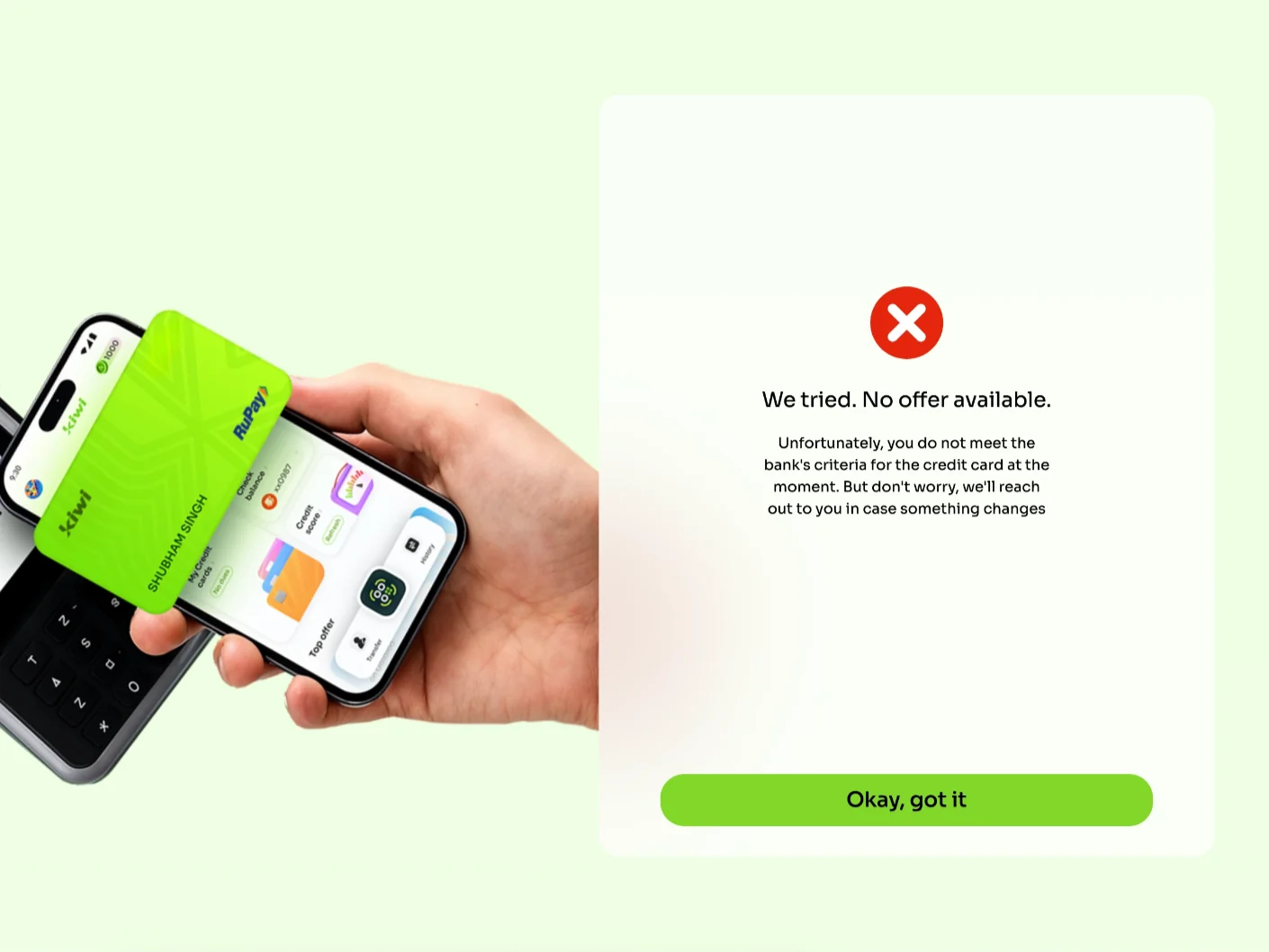
The Kiwi application’s refusal page. On the left, Kiwi’s marketing photograph of a hand holding a green Kiwi credit card over a phone; on the right, a white card carrying a red cross, the words “We tried. No offer available.” and a single green button reading “Okay, got it”.

Kiwi: The people it turns down

I applied for a Kiwi credit card, handed over my PAN, and was refused. So I never saw the product. What I saw instead was everything a company says to the people it says no to, and a retry path twenty minutes later that disagreed with the refusal.

Independent teardown, solo

Kiwi · 2026 · Consumer fintech, India

Content design · Interaction design · Prototype
Read the teardown

ElevenLabs: The question the product won't answer

I spent a day inside ElevenLabs asking the same thing at every tool: what is this going to cost me? The documentation and the interface gave different answers, and the usage tooling that would settle it sits on the developer side of the product.

Independent teardown, solo. ElevenLabs, 2026. AI audio, pricing.

Read the teardown
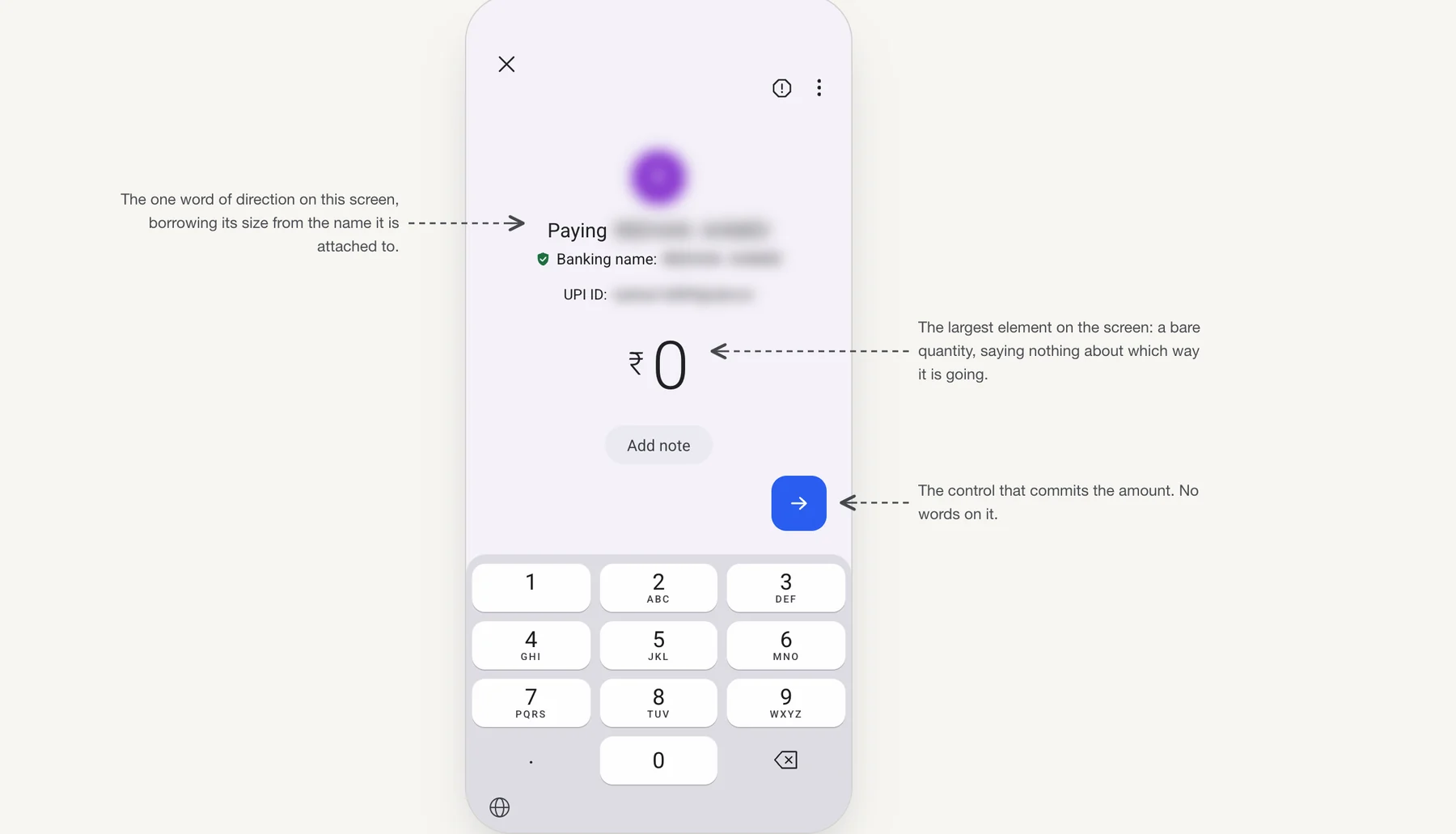
Step 1A, amount entry. The Google Pay screen that opens on scanning a person's QR code, with the payee's photo, name and UPI ID blurred. Three annotations: "Paying", in front of the name, is labelled the one word of direction on this screen, borrowing its size from the name it is attached to; the amount, set far larger than anything else, is labelled the largest element on the screen, a bare quantity saying nothing about which way it is going; and the blue arrow button is labelled the control that commits the amount, with no words on it. A number keypad fills the lower half.

Google Pay: Whoever scans, pays

One in five Indian families with a UPI user has been defrauded. A fifth of them scanned a QR code that took money instead of sending it.

Independent teardown, solo. Google Pay and Paytm, 2026. Consumer payments, India.

Read the teardown